Fulham Road Deep Cleaning Checklist for Chelsea Kitchens
If your Chelsea kitchen is looking a little tired, greasy, or simply not as fresh as it should be, a proper deep clean can make a dramatic difference. The Fulham Road deep cleaning checklist for Chelsea kitchens is not just about wiping surfaces and hoping for the best. It is a practical, room-by-room approach that tackles the build-up you can see, and the bits you usually miss until they start bothering you. Think sticky extractor filters, splashes behind the hob, dust on top of cupboards, and that faint cooking smell that never quite leaves.
This guide breaks the process into clear steps so you can clean more thoroughly, work more efficiently, and know when it makes sense to bring in help. Whether you are preparing for guests, getting ready for a tenancy inspection, or just reclaiming the kitchen after a very busy few months, you will find a checklist that feels manageable rather than overwhelming. And honestly, that matters. Kitchens are where mess multiplies quietly.
Why Fulham Road deep cleaning checklist for Chelsea kitchens Matters
Fulham Road and Chelsea kitchens often live hard lives. Some are elegant but compact, some are busy family spaces, and some are used constantly for cooking, entertaining, and late-night tea raids. Either way, kitchens collect grease, food residue, and moisture faster than most other rooms. A standard weekly clean helps, of course, but it rarely reaches the hidden layers that build up over time.
A deep cleaning checklist matters because the kitchen is a high-contact, high-use environment. The oven, splashback, handles, bin area, fridge seals, and floor edges all need more attention than a quick once-over. If you skip those points, you can end up with lingering smells, dull surfaces, and a kitchen that looks clean at a glance but still feels slightly off when you walk in.
In Chelsea homes, this can also be about presentation. Guests notice the shine on taps, the clarity of glass, and whether the hob has been properly degreased. Let's face it, no one wants to serve supper while staring at last month's splatter on the extractor hood.
There is also a practical side. Deep cleaning supports better hygiene, helps surfaces last longer, and can reduce the risk of stubborn staining on worktops, tiles, and flooring. If you are looking after a rental, moving out, or just keeping your home in good order, this kind of structured clean gives you a much better result than random tidying ever will.
For a broader approach to heavy-duty cleaning elsewhere in the home, it may also help to look at deep cleaning and one-off cleaning options, especially if the kitchen is part of a wider reset after building work, hosting, or a long period without a thorough clean.
How Fulham Road deep cleaning checklist for Chelsea kitchens Works
The idea is simple: clean from the top down, the cleanest areas first, and the dirtiest areas last. That stops debris from dropping onto freshly cleaned surfaces and saves you from doubling back endlessly. A good checklist also separates jobs into stages, so you are not trying to degrease an oven while your sink is still full of washing-up.
A kitchen deep clean usually works best in four phases:
- Clear and prepare - remove clutter, dishes, countertop appliances, bins, and anything blocking access.
- Degrease and detail - tackle the hob, splashbacks, extractor, cupboard fronts, handles, and high-touch points.
- Sanitise and refresh - clean the sink, tap, fridge shelves, bin area, and internal surfaces.
- Finish the room - floors, skirting, edges, and final polish for a tidy, lifted look.
This approach is useful because kitchens are all about sequencing. For example, if you clean the floor too early, crumbs from the cupboards or extractor will end up back on it. Likewise, if you start scrubbing the oven before everything else is cleared, you end up working around yourself. A bit annoying. Very avoidable, though.
Where a property has hard flooring, especially stone, tile, or engineered finishes, it is sensible to be careful with water and cleaning products. If the surface needs a more specialised approach, hard floor cleaning can be a useful complement to kitchen deep cleaning rather than an afterthought.
Key Benefits and Practical Advantages
A detailed kitchen deep clean is not only about appearance. It brings practical gains that show up every day.
- Better hygiene: grease, crumbs, and food residue are removed from the places they like to hide.
- Improved appearance: polished surfaces, clean grout lines, and fresh fixtures make the whole kitchen feel brighter.
- Reduced odours: bin areas, fridge seals, drains, and extractor parts stop holding onto stale smells.
- Longer-lasting surfaces: regular deep cleaning helps prevent build-up that can stain, corrode, or dull finishes.
- Less stress before guests or inspections: you are not scrambling at the last minute trying to make the place look presentable.
There is also something slightly underrated about how a clean kitchen changes the way a home feels. The room sounds different. Less sticky cupboard noise, fewer crusty corners, fewer small visual distractions. It sounds odd, maybe, but once you have cleaned a kitchen properly, you notice the quietness of it.
If you are coordinating a wider domestic reset, combining this with domestic cleaning or house cleaning can help keep the rest of the property consistent. A spotless kitchen next to dusty skirting boards looks unfinished. Humans are funny like that; we notice the mismatch immediately.
Who This Is For and When It Makes Sense
This checklist is useful for a wide range of Chelsea households and Fulham Road properties. It works whether you live in a flat with a compact galley kitchen or a larger home with a busy family space and a lot of traffic through it.
You will probably need it if you are:
- preparing for visitors, a dinner party, or seasonal entertaining
- moving in and want to start with a properly fresh kitchen
- moving out and need a detailed clean before handover
- dealing with heavy cooking build-up, grease, or food stains
- cleaning after building work, redecorating, or renovation dust
- wanting to reset the room after a long period of only light maintenance cleaning
It is also a good fit for busy professionals. Chelsea kitchens often have a stop-start rhythm: quick breakfasts, late returns, takeaway boxes, then a big reset at the weekend. If that sounds familiar, a proper deep clean once in a while can save you from the slow accumulation of grime that no one notices until it is everywhere.
For homeowners and tenants who prefer not to do it alone, help from a cleaning company or experienced cleaners can be the sensible route, especially when time is limited or the kitchen needs specialist attention.
Step-by-Step Guidance
Here is a practical deep cleaning sequence you can follow without losing momentum.
1. Clear the kitchen completely
Remove dishes, tea towels, table clutter, countertop appliances, and any loose items on shelves or windowsills. The more visible the surfaces, the easier it becomes to spot build-up. If there is a lot to remove, box it in stages rather than creating a mountain on the table.
2. Start high and work down
Dust and wipe the top edges of cupboards, light fixtures, extractor casing, and shelves before touching lower surfaces. That way, any loosened dust falls into areas you have not yet finished. This sounds obvious, but kitchens have a way of encouraging people to jump straight to the shiny bits first. Resist that urge.
3. Degrease the cooking zone
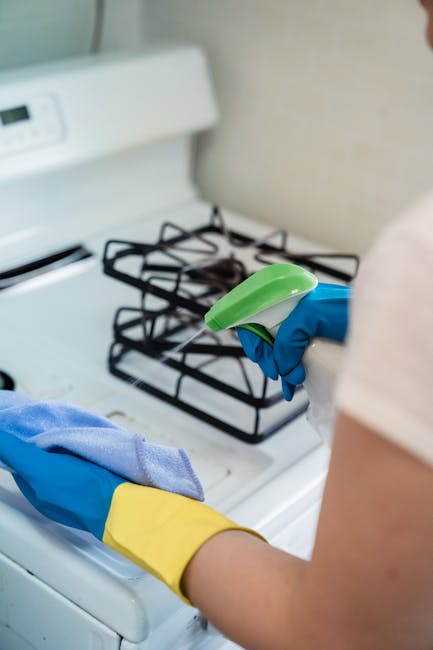
The hob, surrounding tiles, splashback, and extractor hood usually carry the heaviest residue. Use a suitable degreasing product and allow it a little dwell time so it can break down the grime rather than just moving it around. Pay attention to knobs, buttons, vent areas, and the underside of the hood. Grease loves little ledges.
For ovens, trays, and stubborn carbon build-up, specialist help may be worthwhile. A proper oven cleaning service or an oven cleaner can be especially useful when the interior is heavily baked on and DIY methods start feeling like a part-time job.
4. Clean cupboard doors, handles, and edges
These are touch points, so they gather fingerprints and grease faster than people expect. Wipe the fronts, then clean the handles, edges, hinges, and any grooves or mouldings. In period properties, decorative detailing can collect surprising amounts of dust. Beautiful? Yes. Easy to clean? Not always.
5. Refresh the sink and taps
Scrub the basin, clean around the plughole, and polish the tap. Remove limescale where possible, and rinse thoroughly so no residue is left behind. This is one of those small jobs that changes the whole room. A sparkling sink makes the kitchen feel cared for, even if the rest of the clean is still in progress.
6. Deal with the fridge, freezer, and storage areas
Empty shelves if needed, wipe them down, check seals, and clean any spills or sticky spots. You do not need to defrost everything for a routine deep clean, but you should remove crumbs, drips, and those mysterious bits at the back. We have all found a forgotten jar or packet that should never have been allowed to fossilise there.
7. Tackle the bins and waste areas
Wash the bin lid, handle, and surrounding floor area. If there is a pull-out bin, clean the runners and housing too. Bin zones are where odours tend to start, so this step matters more than people think. A clean bin area is a quiet triumph, really.
8. Finish with the floor and edges
Sweep or vacuum first, then mop or clean the floor with the right method for the surface. Do not forget corners, under-cabinet edges, kickboards, and the space beneath movable items. If the room has a lot of hard flooring, a more specialised finish may be needed, especially for stone or natural materials. That is where hard floor cleaning can make a difference.
9. Put everything back in a sensible order
Return clean, dry items to the kitchen only after surfaces are fully dry. Put the most-used items where they are easiest to reach. A deep clean is the perfect moment to improve the room's flow a little. You might as well, since everything is out anyway.
Expert Tips for Better Results
Small choices make a huge difference in kitchen cleaning. Here are the things that tend to separate a decent result from a genuinely good one.
- Let products sit: a few extra minutes of dwell time often does more than aggressive scrubbing.
- Use microfiber cloths: they lift grease and dust well and are better for polished surfaces than rough cloths.
- Work in sections: this keeps the job from turning into a vague all-day ordeal.
- Use two buckets or bowls if needed: one for cleaning solution, one for rinsing, to avoid smearing dirt back around.
- Check under things, not just around them: kettles, spice racks, soap dispensers, and toaster crumb trays are frequent culprits.
One useful habit is to step back every so often and look at the kitchen from the doorway. It sounds simple, but that change in angle shows what your hands have missed. Smudged doors, uneven polish, and dusty corner lines stand out more from a distance.
If the job includes upholstery dining chairs, a breakfast bench, or fabric banquette seating near the kitchen, it can be worth pairing the clean with upholstery cleaning or even sofa cleaning if the living space connects directly to the kitchen. Open-plan homes, in particular, tend to collect cooking residue on soft furnishings without anyone noticing for ages.
Common Mistakes to Avoid
Most kitchen deep cleaning mistakes are not dramatic. They are small, repeated, and slightly annoying. The good news? Easy to fix.
- Using one cloth for everything: this spreads grease from one area to another.
- Cleaning in the wrong order: if you mop first and degrease later, you will just chase debris back onto the floor.
- Forgetting high and hidden spots: cupboard tops, extractor filters, and under appliances collect more than you think.
- Over-wetting surfaces: some finishes dislike too much moisture, especially around joints and seals.
- Rushing the oven or extractor: baked-on grime rarely shifts instantly, no matter how much we wish it would.
Another common issue is trying to use a single strong product for every surface. That is not always a great idea. Stainless steel, wood, stone, laminate, and glass all behave differently. If you are unsure, test carefully on a small hidden area. Better boring than sorry.
Tools, Resources and Recommendations
You do not need a huge kit, but the right basics help a lot. A simple, sensible setup is often best.
| Tool or Product | Best For | Why It Helps |
|---|---|---|
| Microfiber cloths | General wiping and polishing | Good grip on dust and grease without leaving much lint |
| Degreaser | Hob, splashback, extractor, cupboard fronts | Breaks down oil residue more effectively than plain soap |
| Soft sponge or non-scratch pad | Sinks, handles, appliance exteriors | Helps remove marks without damaging finishes |
| Vacuum with crevice tool | Kickboards, corners, under appliances | Pulls out crumbs and dust before wet cleaning starts |
| Mop suited to the floor type | Tile, vinyl, sealed stone, other hard floors | Gives a cleaner finish without soaking the room |
For people who prefer not to juggle products and tools themselves, booking a cleaner or arranging one-off cleaning can be a practical shortcut, especially before events or after a long gap between cleans. If the work is part of a wider home reset, home cleaners may be a sensible fit too.
For businesses or mixed-use properties, the same logic applies, though the standards of scheduling and access can be different. In that case, office cleaning or office cleaners may be more relevant if the kitchen is a staff or communal space rather than a domestic one.
Law, Compliance, Standards, or Best Practice
For a domestic kitchen deep clean, there usually is not a dramatic legal framework to worry about, but there are still sensible UK best-practice considerations. Cleaning products should be used according to their labels, surfaces should not be left slippery, and any work near electrical appliances should be done carefully and with common sense.
If you are hiring a cleaning provider, it is reasonable to expect clear information about safety, insurance, and how products are handled. That is part of good professional practice, not a luxury. Reputable providers should also be able to explain how they work around fragile surfaces, access issues, and the realities of busy Chelsea properties where parking, entry, and time windows can be tight.
For customers who like to check standards before booking, it is worth reviewing pages such as health and safety policy, insurance and safety, and terms and conditions. Those pages help set expectations around responsibility, access, and service scope. If you care about how a company operates more broadly, about us and recycling and sustainability can also be useful reading.
Truth be told, most good cleaning decisions come down to clarity: what is included, what products are used, what happens if something is delicate, and who is responsible for access or keys. Simple things, but they save awkward moments later.
Options, Methods, or Comparison Table
There is more than one way to deep clean a kitchen. The right method depends on the condition of the room, how much time you have, and whether you need a quick refresh or a fuller transformation.
| Method | Best For | Pros | Limits |
|---|---|---|---|
| DIY checklist clean | Regular resets and light-to-moderate build-up | Low cost, flexible, easy to start | Time-consuming, easy to miss hidden areas |
| One-off professional clean | Heavy build-up, moving in/out, pre-event preparation | More thorough, less effort for you, good for detailed work | Requires scheduling and budget planning |
| Targeted specialist cleaning | Oven, hard floors, carpets, upholstery, windows | Focuses on problem areas that need extra attention | May need to be combined with other cleaning tasks |
If the kitchen is just one part of a larger refresh, consider whether the surrounding spaces also need help. A clean kitchen next to streaky glass or tired rugs can make the whole home feel slightly unfinished. That is why some people combine kitchen work with window cleaning, rug cleaning, or even carpet cleaning when the whole property needs a proper lift.
Case Study or Real-World Example
Here is a realistic scenario from the sort of homes you see around Fulham Road and Chelsea.
A couple preparing for a family visit realised their kitchen looked fine in normal daylight, but by early evening the details started showing. The extractor hood had a greasy film, cupboard handles felt tacky, and the floor kept gathering crumbs around the kickboards. Nothing dramatic. Just enough to make the room feel a bit weary.
They started with the top shelves, then the extractor, then the hob and splashback, and only after that moved to the sink, fridge shelves, and floor. The biggest improvement came from the small things: cleaning the handles properly, wiping the cupboard edges, and paying attention to the floor corners. The room did not suddenly become a showroom. It became usable, fresh, and easy to be in. That is the real win.
They also decided to book specialist help for the oven because the interior was beyond a normal household scrub. Sensible, really. No one needs to spend Saturday afternoon scraping carbon while the kettle sits untouched and judging them from the counter.
This kind of example matters because it shows the value of a checklist. Not perfection. Not performance. Just a structured way to get a real result.
Practical Checklist
Use this as a room-by-room deep cleaning checklist for Chelsea kitchens. Print it, save it, or work through it slowly.
- Clear counters, window sills, and table surfaces
- Remove bins, mats, chairs, and movable items from the work area
- Dust tops of cupboards, shelves, and light fixtures
- Clean extractor hood casing and filters
- Degrease hob, splashback, and the area behind cooking appliances
- Wipe cupboard fronts, handles, hinges, and edges
- Clean around switches, sockets, and high-touch spots
- Scrub sink, tap, and plughole area
- Wipe fridge shelves, seals, and external panels
- Clean microwave inside and out
- Empty and clean bin area
- Vacuum under furniture, in corners, and along skirting edges
- Mop or wash the floor using the correct method for the surface
- Dry all surfaces fully before replacing items
- Check the room from the doorway for missed marks or streaks
Expert summary: the best kitchen deep clean is not the one that looks dramatic halfway through. It is the one that feels calm, thorough, and finished when you walk back in later. That quiet, fresh feeling is what you are after.
Get a free quote today and see how much you can save.
Conclusion
A strong Fulham Road deep cleaning checklist for Chelsea kitchens gives you structure, saves time, and helps you reach the places a normal clean tends to miss. The real value is not just in making the room look better for an afternoon. It is in restoring the kitchen to a state where it feels easy to use again.
Whether you are doing it yourself, bringing in help, or combining it with wider home cleaning, the main thing is to be methodical. Start high, move down, pay attention to the hidden edges, and do not rush the greasy parts. Those are usually the bits that make the biggest difference.
And if the job feels bigger than one weekend, that is completely normal. Kitchens work hard. They deserve proper attention now and then. A clean kitchen changes the whole mood of a home, and that is no small thing.
Frequently Asked Questions
What is included in a Fulham Road deep cleaning checklist for Chelsea kitchens?
It usually includes cupboard fronts, handles, extractor hoods, hobs, splashbacks, sinks, taps, fridge areas, bin zones, floors, edges, and other hidden spots that are often missed in routine cleaning.
How often should a Chelsea kitchen be deep cleaned?
That depends on how much cooking happens, but many homes benefit from a full deep clean every few months, with lighter maintenance in between. Busy kitchens may need it more often.
Is oven cleaning part of kitchen deep cleaning?
It often is, yes, especially if the oven has heavy grease or baked-on residue. Some people separate it out because it takes extra time, and specialist oven cleaning can produce a more thorough result.
What makes a deep clean different from a normal kitchen clean?
A normal clean covers visible surfaces and daily dirt. A deep clean goes after build-up, hidden grease, details around fittings, and neglected areas behind or under appliances.
Can I deep clean my kitchen myself?
Yes, if you have time, suitable products, and a decent checklist. The main challenge is not difficulty. It is energy and consistency. Kitchens have many small surfaces, so the job can stretch out if you do not work methodically.
What are the hardest parts of a kitchen deep clean?
Extractor hoods, ovens, grout, floor edges, bin areas, and the little sticky patches around handles and switches are usually the most time-consuming. Those areas need patience, not just effort.
Are professional cleaners worth it for a kitchen deep clean?
They can be, especially if the kitchen is heavily used, you are short on time, or you need a one-off reset before moving, hosting, or inspection. A deep cleaning service is often the practical choice when the job has built up a lot.
What should I clean first in the kitchen?
Start high and work down. Cupboards, shelves, lights, and extractor areas should come before the hob, sink, and floor so you do not undo your own work.
Which areas are most likely to hold odours?
Bin spaces, fridge seals, sink drains, oven interiors, and extractor filters are the usual suspects. If a kitchen still smells off after a surface clean, one of those areas is often the reason.
Do I need special products for Chelsea kitchen surfaces?
Not always, but different materials do need different care. Laminate, stone, wood, stainless steel, and glass can all react differently to moisture and chemicals, so always check the surface guidance before scrubbing away.
Can kitchen deep cleaning help before end of tenancy inspections?
Absolutely. A thorough kitchen clean is one of the most important parts of move-out preparation. If the whole property needs attention, end of tenancy cleaning may be the more efficient overall option.
What if my kitchen also needs floor or fabric cleaning?
That is very common. Many kitchens connect to dining or living spaces, so it can make sense to pair the work with hard floor cleaning, carpet cleaning, or upholstery cleaning depending on the layout.
How do I choose a good cleaning provider?
Look for clear service information, sensible safety practices, and transparent policies. Helpful pages include pricing and quotes, payment and security, and contact us if you need to ask practical questions before booking.